


The Ohio HIDTA aims to reduce drug trafficking and related crimes across Ohio, Northern Kentucky, and Western Pennsylvania through coordinated enforcement and intelligence efforts.
Overview and Purpose
- Established in 1999, led by Executive Director Andrew Deserto.
- Focuses on disrupting DTOs and MLOs involved in transportation, manufacture, and distribution of illicit drugs.
- Supports federal, state, and local agencies with strategic intelligence and operational coordination.
Strategy and Operations
- Uses co-located personnel from multiple agencies to identify and dismantle drug organizations.
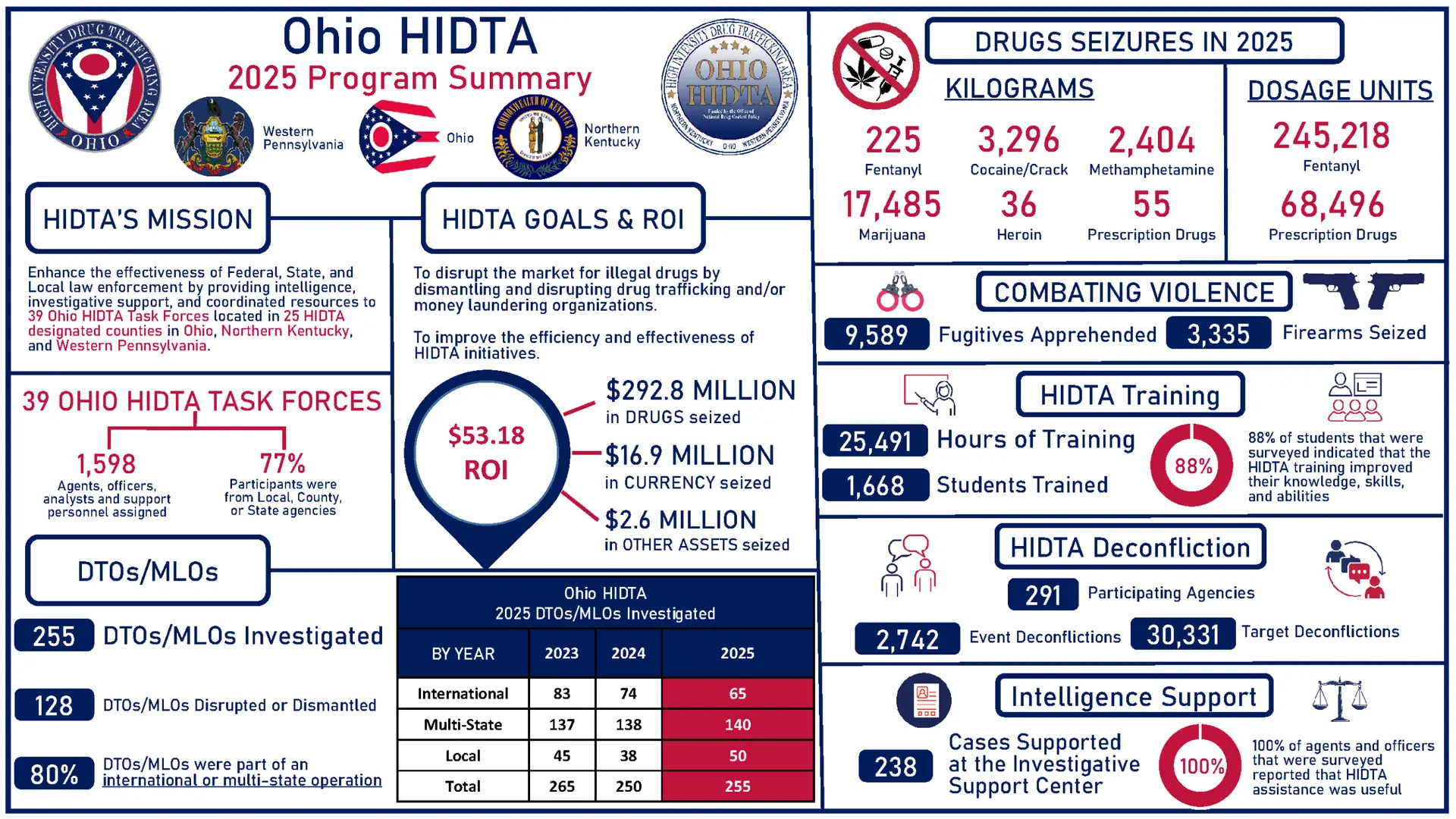
- Implements 43 approved initiatives across the region.
- Engages 296 agencies with 1,585 personnel, including agents, officers, and analysts.
- Headquarters in Cleveland, Ohio, covering multiple counties in Ohio, Kentucky, and Pennsylvania.
Key Initiatives and Focus Areas
- Supports enforcement, interdiction, training, intelligence, and IT initiatives.
- Short-term goals for 2025 include disrupting 112 DTOs, with significant return on investment in assets and drugs.
- Emphasizes intelligence support through the HIDTA ISC, providing analytical case support, deconfliction, and data sharing.
- Utilizes tools like Case Explorer, ODMAP, and social network analysis to enhance investigations and overdose tracking.
Threat Assessment
- The region faces high levels of substance use disorder and overdose deaths.
- Synthetic opioids, especially fentanyl, are the primary drug threat, highly available and replacing heroin.
- Seizures of fentanyl decreased slightly in 2024, but overall availability remains high.
- Methamphetamine, particularly crystal form, is rapidly expanding, with record seizures of 2,480 kg in 2024.
- Cocaine remains highly available, with increased seizures of powder cocaine, often contaminated with fentanyl.
- Heroin seizures increased but remain below pre-fentanyl dominance levels.
- Marijuana from domestic sources is highly available, with seizures up 50% from 2023.
- Prescription drug misuse persists, with diversion through theft, trade, and counterfeit pills containing fentanyl.
- MDMA seizures reached record levels, with 242 kg in 2024, often linked to clubs and festivals.
- Psilocybin seizures surged, with 120 kg in early 2025, surpassing previous years.
- Other drugs like synthetic cathinones, cannabinoids, LSD, and PCP are present at moderate to low levels.
International and Regional Threats
- Mexican DTOs dominate production and transportation of synthetic opioids, heroin, meth, and cocaine.
- Use of interstate highways facilitates large shipments to major markets like Chicago, Detroit, and New York.
Intelligence and Data Sharing
- The ISC supports tactical, operational, and strategic intelligence, enhancing agency coordination.
- Overdose data collection via ODMAP helps identify spikes and at-risk populations.
- 86,449 overdoses recorded across 82 Ohio counties as of July 2025.
- 349 agencies participate in ODMAP, sharing overdose and drug threat data.
Task Forces and Enforcement
- Multiple federally funded task forces operate across the region, targeting various counties.
- These units focus on drug interdiction, dismantling DTOs, and supporting intelligence efforts.
- Collaboration among agencies enhances regional drug enforcement and intelligence sharing.
Ohio HIDTA Investigative Support Center —Cleveland, OH 44109
Mon-Fri: 9 AM – 6 PMSaturday: ClosedSunday: Closed